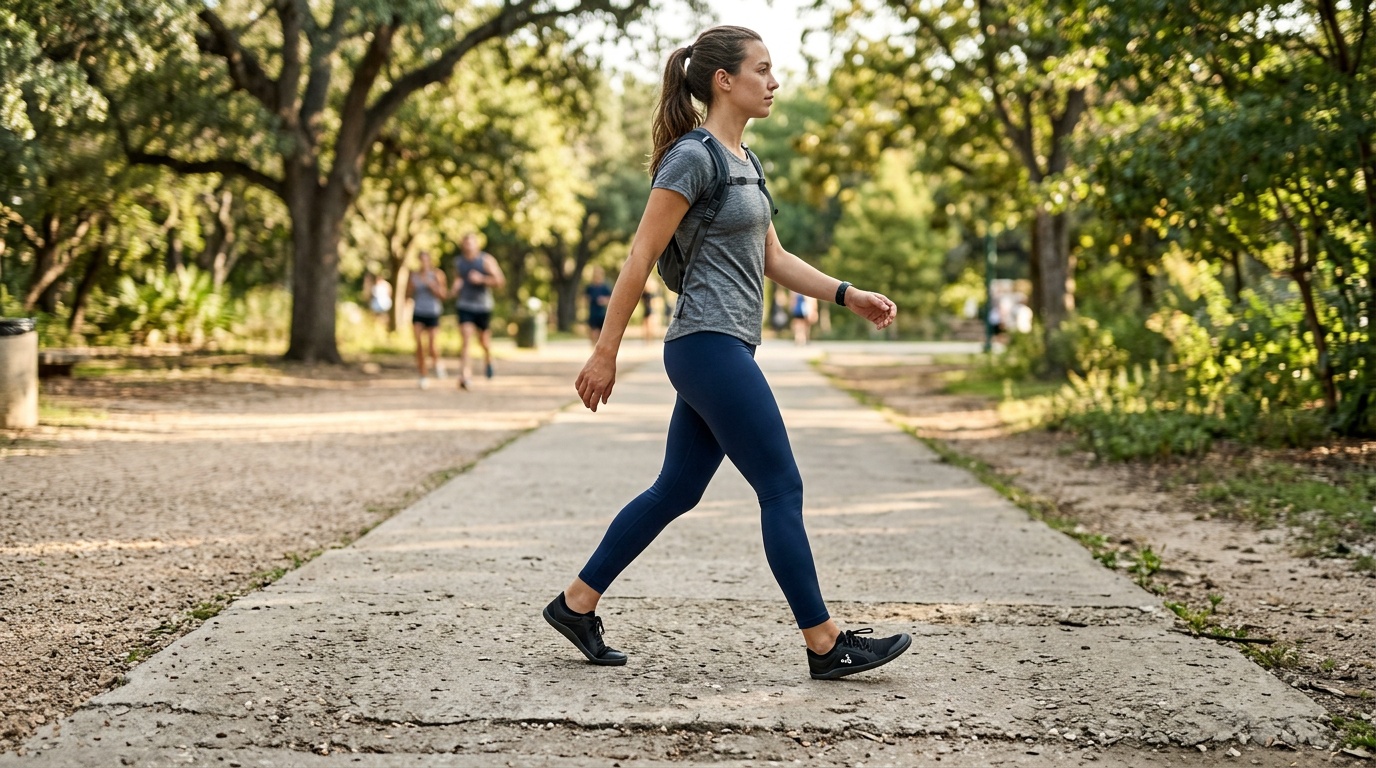
I would wear barefoot shoes for a short walk on concrete, but I would not make an eight-hour concrete-floor shift my first transition session. Barefoot shoes can work well on hard surfaces when the fit, exposure, and your current capacity line up. They are not automatically the most comfortable choice for prolonged standing, and a thinner sole is not a shortcut to stronger feet.
After six years of barefoot-only running, my coaching bias is toward patient practice. My own transition accompanied getting past IT band trouble, but that experience does not make minimalist footwear a treatment for everyone. Around Austin, pavement is part of everyday life. The useful question is how much of it your feet can handle today, not whether concrete disqualifies barefoot shoes forever.
This guide covers barefoot shoes, concrete floors, workplace fatigue, and the transition decisions that matter more than a barefoot label.
As an Amazon Associate, I earn from qualifying purchases through links in this article.
1. Concrete changes the comfort equation
Concrete offers very little give under your foot. A thin sole lets you feel that firmness clearly, while cushioning changes the pressure and sensation underfoot. Neither setup tells the whole injury story: your speed, stride, exposure, previous footwear, and recovery all matter.
Separate three features that often get bundled together. Zero-drop means the heel and forefoot sit at the same height inside the shoe. A wide toe box gives your toes room to spread without being squeezed. A thin, flexible sole provides relatively little cushioning and bends readily. You can choose a roomy, zero-drop shoe with cushioning; you do not have to accept the thinnest sole to get the other features.
Tile over a concrete slab can present much the same practical challenge as exposed concrete. Carpet may soften the feel without changing the hard base underneath. Outdoor sidewalks add slopes, rough patches, heat, and repeated turns. Count the time you spend on those surfaces rather than treating indoor and outdoor exposure as unrelated.
My first coaching warning is simple: a comfortable first ten minutes tells you about immediate comfort. It does not establish readiness for the whole day. The next morning belongs in your assessment.
2. Walking, standing, and running need different decisions
Walking alternates loading and unloading between feet. Standing at a register keeps you in a much narrower range of positions, often with little opportunity to relieve pressure. Running adds a different level of demand. Being comfortable in one activity does not automatically prepare you for another.
| Situation | My starting recommendation | What to monitor |
|---|---|---|
| Short sidewalk walks | Try a brief outing in well-fitting barefoot shoes, with an easy way home. | Comfort during the walk and your first steps next morning. |
| City sightseeing or a long commute | Build shorter outings first; consider more cushioning and carry familiar shoes. | Total walking time, tired feet, and changes in stride. |
| Mostly stationary retail or workshop work | Prioritize pressure relief, movement opportunities, and a suitable mat. | Whether discomfort increases through the shift. |
| Warehouse work with substantial walking | Meet workplace footwear requirements first; introduce changes outside work. | Walking volume, carried loads, traction, and recovery. |
| Running on pavement | Treat minimalist running as a separate progression. | Calf, Achilles, and forefoot response over the following day. |
A NIOSH review of prolonged standing describes fatigue, discomfort, and swelling associated with standing work, and emphasizes opportunities to move and change posture. That supports a practical workplace decision: address how you spend the shift alongside what you put on your feet.
3. Let your gait adjust without forcing a new foot strike
Walking: relax the toes and stop reaching
A heel-first landing is normal during walking. Do not start tiptoeing down the sidewalk because someone said barefoot movement requires a forefoot strike. If every step feels like a heel slap, experiment with slightly shorter, comfortable steps and an easy pace. Keep your upper body relaxed rather than crouching to manufacture softness.
The second mistake I watch for is toe gripping. A loose heel or oversized shoe can make you claw at the footbed to hold the shoe on. Tightening the laces appropriately or choosing a better-fitting shape is more useful than rehearsing a special walking technique. Your toes should have room, but your whole foot should not slide around.
Running: loading moves; it does not disappear
Minimal footwear and a forced forefoot landing can increase demands on the calf and Achilles. A study examining footwear and foot strike found changes in Achilles loading with these choices. That is a reason to avoid changing shoes, landing pattern, and mileage together.
I use relaxed, manageable steps as a coaching cue, not a demand for a particular foot strike or a universal cadence number. Do not hold your heel off the ground throughout stance to look more barefoot. If you need exaggerated technique to tolerate the surface, reduce the exposure and reconsider the shoe.
Zero-drop deserves its own adjustment period when you are used to an elevated heel. Extra cushioning can improve underfoot comfort, but it does not remove that change in heel height.
4. Choose enough shoe for the actual job
Fit comes before sole thickness
Try shoes with the socks you will wear, ideally later in the day. Your longest toe needs clearance, your little toe should not be pushed inward, and the upper should not press down on your toes. Walk, turn, and stop: the heel should remain secure without excessive lace pressure across the top of your foot.
Do not assume every barefoot model has the same shape. A wide forefoot with a narrow heel needs a different fit from a high-volume foot. Sizing up to fix a narrow toe box can leave you sliding forward; choosing a different last is often the better answer.
Cushioning is a useful option on concrete
For long hard-floor days, I would consider wide-toe-box zero-drop cushioned walking shoes before insisting on a paper-thin sole. This is a shopping category, not a claim that every listing meets those specifications. Check the manufacturer’s actual heel-to-toe drop, fit guidance, and intended use.
If your current shoe otherwise fits, flat full-length cushioning insoles are another option. Use them only if the shoe has enough internal room. Stacking inserts can crowd toes and lift the heel out of its secure position. An insert that is thicker at the heel also changes the shoe’s effective drop.
Workplace requirements outrank barefoot preferences
A flexible rubber outsole is not proof of suitable slip resistance. Kitchens, hospitals, warehouses, and workshops may have specific requirements for traction, protective toes, puncture resistance, or other hazards. Confirm the exact model meets your employer’s requirements. A casual minimalist sneaker is not a substitute for required protective footwear.
My rule for workplace experiments: keep a familiar, compliant pair available. Switching shoes before fatigue changes your movement is sound judgment.
5. Build concrete exposure in repeatable steps
There is no universal transition calendar. Someone who already walks comfortably barefoot at home starts differently from someone who spends every day in stiff, elevated-heel shoes. Running fitness also does not guarantee that the feet are ready for less cushioning.
In a small study of a ten-week minimalist running transition, more runners in the minimalist group developed increased foot bone marrow edema on MRI than in the control group. This was running research, not a concrete-floor workplace trial. It still undercuts the assumption that following a gradual calendar guarantees safety.
- Establish your baseline. Note your existing walking, standing, and running load, plus any pain before changing footwear. Keep your usual comfortable shoes available.
- Start with a short, optional outing. For a pain-free beginner, five to ten minutes of easy walking on a familiar, level surface can be a conservative trial. Start lower if needed; this is an example, not a prescribed dose.
- Repeat before extending. Keep the same exposure across several comfortable sessions. Check your feet that evening and the following morning.
- Add a small amount of time. A few extra minutes is enough to test the next step. Keep pace, carried weight, and other exercise steady.
- Introduce work in manageable blocks. Only after shorter everyday use is comfortable, try a portion of a shift if changing footwear is practical. If you cannot change shoes, keep the experiment outside work.
- Progress running separately. Comfortable walking does not authorize your normal running mileage in a new shoe. Begin with brief easy running intervals and plenty of walking, adjusting to your response.
My third transition warning is about the forgotten load: the commute, dog walk, grocery trip, and evening chores all count. A short planned session can become hours of new exposure when you leave the shoes on afterward. Track total wear time, not just exercise time.
You can alternate with familiar footwear for as long as useful. There is no graduation requirement that says every hour must eventually happen in the same shoes.
6. Reduce fatigue instead of training through it
At a stationary workstation, vary your position and take permitted movement or sitting breaks. Avoid locking your knees and staying frozen in one posture. Where the workplace permits it, an anti-fatigue standing mat with beveled edges may improve comfort. Choose one appropriate for the floor, cleaning needs, and slip hazards, and keep its edges out of walking routes.
At home, switch between standing and sitting for tasks instead of treating kitchen time as extra foot training. Easy, controlled calf raises and balance practice can be useful additions when comfortable, but avoid piling a new strengthening routine on top of a big increase in shoe exposure.
Mild, diffuse muscle tiredness that settles is different from localized pain. Even mild soreness is a reason to hold the dose steady or reduce it, not proof that the transition is working. My fourth coaching warning: do not use discomfort as a scorecard for progress.
Stop the new exposure if pain changes your stride, gets progressively worse, or is concentrated in one spot. Swelling or tenderness over a bone deserves assessment; these are among the signs described in AAOS guidance on foot and ankle stress fractures. Persistent heel pain or Achilles stiffness also warrants backing off and getting appropriate advice. Do not dismiss symptoms as your feet getting stronger.
7. Frequently asked questions
Are barefoot shoes good for standing on concrete all day?
They can suit an adapted wearer, but I would not make them the default recommendation for someone starting a long standing job. Roomy footwear, adequate cushioning, workplace safety, and opportunities to change posture matter more than meeting a strict barefoot definition.
Will concrete damage my feet in barefoot shoes?
Damage is not inevitable simply because the surface is concrete. The concern is whether the load exceeds what you currently tolerate. Thin soles offer less cushioning, and a rapid increase in exposure can create problems. Comfortable progression matters more than declaring a surface universally safe or unsafe.
Should I start on grass instead?
Softer ground may feel more comfortable, but grass can conceal holes and uneven footing. Choose a predictable surface for early practice. Short, controlled sidewalk exposure can help you assess sidewalk tolerance more directly than a long walk on an unfamiliar field.
How long until concrete feels comfortable?
There is no reliable deadline. Judge progress by repeatable comfort during use, afterward, and the next morning. If longer exposure keeps bringing symptoms back, use more cushioning or less time and reassess. My target is comfortable movement through your actual day, not the thinnest shoe you can endure.