I keep barefoot-shoe cleaning boring: remove loose dirt, clean gently with a material-appropriate cleaner, and air-dry without heat. If you want to know how to clean barefoot shoes without ruining them, start with the upper material and the exact model’s care label. A flexible rubber sole does not make the whole shoe washable.
After six years of barefoot-only running, my priority is preserving the fit I chose: room for my toes, a flat platform, and an upper that holds my foot without squeezing it. A stain is cosmetic. A shrunken toe box or peeling sole changes whether I can comfortably run in the shoe.
Fast answer: Remove removable insoles and laces, brush off ordinary dried mud, spot-clean with cool water and a little approved mild cleaner, remove the residue, and dry everything separately in moving air. Avoid soaking leather or suede. Use a washing machine only when the manufacturer explicitly permits it for your model.
As an Amazon Associate, BarefootRanked earns from qualifying purchases.
1. Match the cleaning method to the upper
Read the product page or care label before getting anything wet. Check for leather trim, wool lining, a waterproof membrane, and glued overlays. With mixed materials, follow the instructions for the most sensitive component unless the manufacturer gives a specific method for the complete shoe.
| Material | Conservative starting method | Main mistake to avoid |
|---|---|---|
| Synthetic mesh or knit | Gentle spot-cleaning with diluted mild cleaner | Hard brushing that catches or frays fabric |
| Canvas or hemp textile | Remove dry dirt; use a damp cloth and approved textile cleaner | Assuming every textile shoe can be soaked |
| Smooth leather | Damp wipe, then compatible leather care if needed | Immersion and indiscriminate conditioning |
| Suede or nubuck | Dry suede brush first; dedicated cleaner for remaining marks | Soaking or applying smooth-leather wax |
| Wool or specialist lining | Follow model instructions for cleaner and temperature | Treating it like synthetic running mesh |
| Waterproof construction | Use the maker’s membrane-compatible method | Adding an unapproved coating or fabric softener |
Test any new cleaner on a small hidden area and let it dry before treating the whole upper. Check for color transfer, rings, and texture changes. “Natural” on a bottle does not establish compatibility with dyes, finishes, or adhesives.
Build a small cleaning kit
A soft cloth, bowl, towel, and clean soft toothbrush cover most jobs. If you need a dedicated tool, choose a soft-bristle shoe cleaning brush. Keep the outsole brush separate from the one used on uppers. Suede owners may also want a suede brush and eraser kit; check its instructions before touching delicate panels.
2. Hand-clean the upper and sole in the right order
Prepare the shoe before adding water
Remove laces and insoles only if they are designed to come out. Do not pry up a bonded footbed. Open the tongue, shake out grit, and inspect the seam where the upper meets the sole. If it is already separating, stop before a deep wash and contact the manufacturer or a repair service.
For ordinary trail mud, let surface clumps dry enough to brush away without smearing them through fabric. Work over a bin. Animal waste or other contamination needs prompt, separate handling; do not treat it as harmless dried dirt or clean it around food-preparation surfaces.
Work on small areas
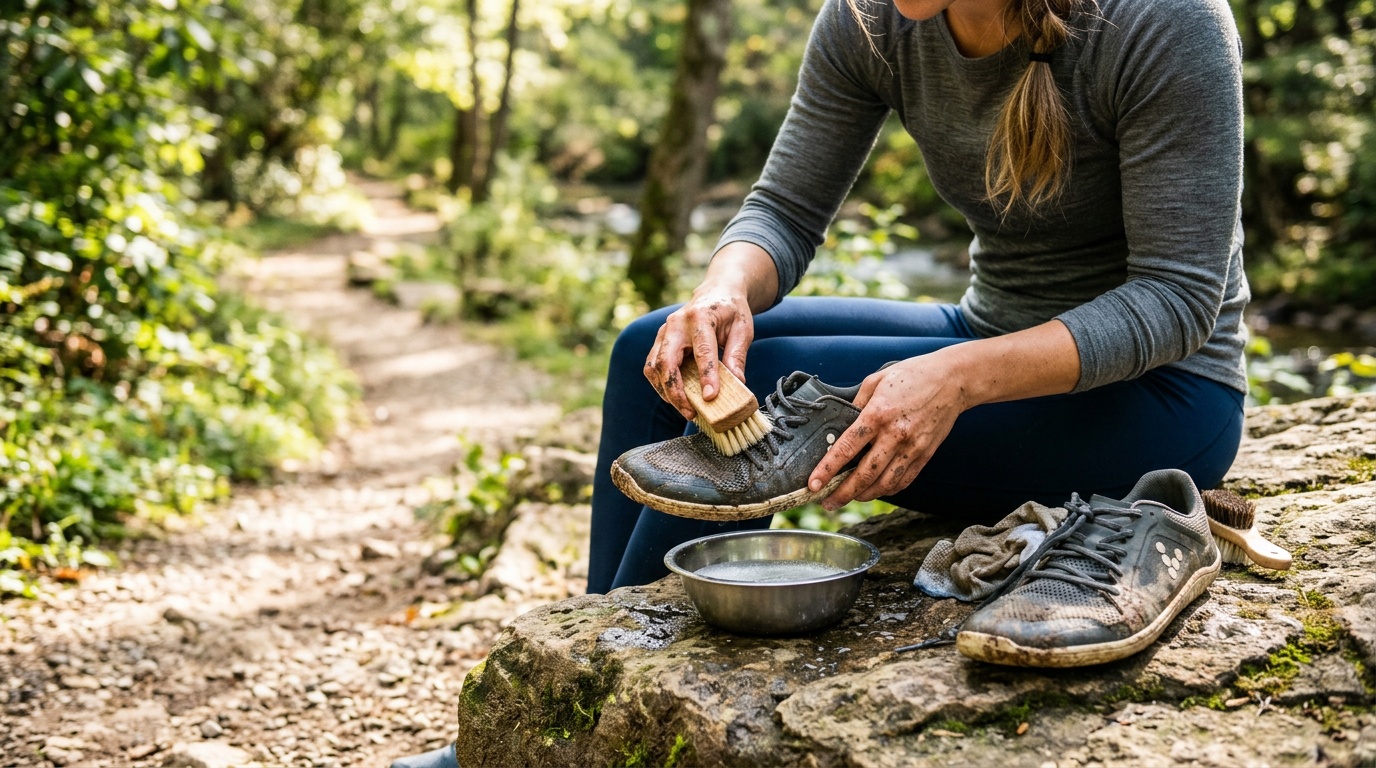
For a washable synthetic upper, dilute a mild non-bleach cleaner according to its directions. Dampen the cloth or brush instead of pouring cleaner onto the shoe. Support fabric from inside with your hand and use light strokes. Start with one dirty panel, then reassess before wetting the entire upper.
Remove cleaner with a fresh damp cloth, repeating until residue is gone. If the model permits rinsing, use a gentle flow. Stop if dye transfers noticeably, a coating lifts, or fibers start to fuzz. More pressure rarely solves a material-compatibility problem.
Clean tread without attacking the sole bond
Use the separate soft brush to loosen dirt in outsole grooves. Lift trapped pebbles with fingers or a blunt wooden tool; never dig a knife into thin rubber. Keep tools away from the upper-to-sole seam, and avoid pressure washers or aggressive twisting.
Remove cleaning residue from the outsole before wearing it. Look again at the tread once clean: packed dirt can hide worn patches, cuts, and separation. Cleaning can uncover damage, but it cannot restore rubber that has worn away.
My coaching rule is to check grip and comfort with a short walk before the next run. If you shorten one step to avoid a rubbing seam or slip inside the shoe, fix the fit first. Do not use a workout to see whether the problem disappears.
3. Follow brand instructions without generalizing across models
Vivobarefoot: hand washing is the starting point
Vivobarefoot’s care guidance separates synthetic footwear from leather and suede. It recommends brushing and hand cleaning, with air drying away from radiators and direct sun. Its synthetic deep-clean method allows a limited soak, while leather and suede should not be submerged.
That distinction matters when searching “can I wash my Vivos?” The brand name alone is not enough. Identify the model and materials before borrowing another owner’s wash routine.
Xero Shoes: use the individual care tab
Xero’s cleaning guide recommends gentle cleaning and air drying, with separate advice for knit, mesh, leather, suede, and canvas. It also directs owners to the product page’s care tab. Follow that model-specific information when a general cleaning tip seems too broad.
For smooth leather, confirm that any conditioner suits its finish. For suede, begin dry and use a suede-specific product if needed. A cleaner that works on a rubber sidewall may be unsuitable for the neighboring upper.
Vibram FiveFingers: machine washing can be permitted
Vibram’s product-care instructions say FiveFingers are generally machine washable on a gentle cold cycle, followed by air drying. Check your pair’s instructions, especially for leather versions or unusual materials.
A Vibram-branded outsole on another company’s shoe does not grant machine-wash permission. The shoe manufacturer determines how the assembled product should be cleaned. For any brand, if instructions are missing or conflicting, spot-clean while you ask customer support.
4. Clean insoles and manage odor at its source
Check removable insoles separately: a washable upper does not guarantee a washable insert. Where permitted, wipe both faces with diluted mild cleaner, remove residue, and dry flat. Do not wring foam or fold an insole to squeeze out water. Hand-wash ordinary washable laces separately and rinse thoroughly.
With a fixed footbed, use a barely damp cloth and give the open shoe extra drying time. Flooding the inside to chase a smell creates more moisture to remove. Inspect the toe area for trapped lint, grit, or a folded liner.
In Austin, I plan shoe drying around the next session. Opening the tongue and taking out damp removable insoles after a sweaty run is a more useful habit than letting everything sit zipped inside a gym bag. A deeper wash should solve a specific problem, not become a daily ritual.
Foot care matters too. The CDC recommends washing and fully drying feet, changing socks at least daily, and keeping feet and toes clean and dry. Wash socks according to their labels. If a sock seam crowds your toes, choose a better fit rather than tightening the shoe around it.
Deodorizing is not disinfecting
A pleasant smell does not prove footwear has been disinfected. A 2024 review of shoes and floors in healthcare settings found evidence of pathogen contamination, but its hospital context does not establish a need to disinfect running shoes after every outing.
Likewise, Iowa State’s footwear biosecurity guidance explains that dirt must be removed before disinfectants can work. That is a useful distinction, not permission to apply farm-boot chemicals to knit sneakers.
If disinfection is needed, select a product labeled for the intended use and compatible with the shoe, then follow its contact-time and drying instructions. Never mix cleaners. Persistent itching, peeling skin, or nail changes deserve healthcare advice; repeated shoe washing alone may not address the problem.
5. Dry shoes without shrinking the upper
Press a towel against wet surfaces to absorb water, then open the shoes in a shaded, ventilated place. Use a room-temperature fan if airflow is poor. Loosely insert plain absorbent paper to help hold their shape, replacing it when damp. Avoid packing the toe box tightly.
Vivobarefoot’s synthetic care guide specifically recommends natural drying out of direct sun and replacing absorbent paper to speed the process. Its advice also warns that machine washing can damage bonding.
Skip the tumble dryer, radiator, hair dryer, and hot car. Do not assume a heated shoe dryer is suitable unless your shoe manufacturer approves it. There is no dependable universal drying time: lining thickness, humidity, airflow, and how wet the shoe became all matter.
Check deep inside the toe box and beneath the insole area before reassembly. Press a dry tissue against the lining to check for residual moisture. An upper can feel dry outside while the interior remains damp. If the shoes are still wet tomorrow, wear another familiar pair or adjust the session.
6. Check fit before returning to your running plan
Reinstall each insole flat, with its heel seated correctly and no curled edge under the toes. Loosen the laces before trying the shoes on. Stand, spread your toes naturally, and walk: check for new pressure over the forefoot, heel movement, or a ridge underneath.
A wide toe box only helps when your toes actually have space. Do not lace a shrunken upper tighter or assume it needs another break-in period. If the sole looks distorted or the bond has opened, pause use and ask about repair or replacement.
Zero-drop describes the heel-to-forefoot height difference; it does not dictate a particular foot strike. My transition cue is relaxed steps, not running on tiptoe. Keep the cleaning routine from becoming an excuse to change shoes, insoles, running surface, and mileage all at once.
Working through IT band trouble during my own barefoot transition taught me to respect gradual changes, but that experience does not establish a cure. A systematic review of barefoot and minimalist running found biomechanical differences while concluding that evidence did not support definitive claims about specific risks or benefits. Clean footwear preserves equipment; it does not replace sensible training progression.
For beginners, my practical recommendation is simple: after cleaning, make the first outing short and familiar. Keep your planned transition pace instead of adding distance because the shoes feel fresh.
7. Frequently asked questions about cleaning barefoot shoes
Can you put barefoot shoes in the washing machine?
Only when your model’s manufacturer permits it. Some FiveFingers can be machine washed; that does not apply to every minimalist shoe. Follow the specified temperature, cycle, and detergent instructions, then air-dry. A laundry bag does not override a hand-wash-only label.
How often should you clean barefoot shoes?
Remove grit and let shoes dry after use. Spot-clean when visibly dirty, and clean the interior when sweat buildup or odor warrants it. Ordinary dust does not require a full wash. Inspect soles and seams regularly, particularly after muddy trail outings.
Can you use baking soda or vinegar for odor?
Do not make either your default treatment. Vivobarefoot suggests baking soda in its general care guide, but that is not universal approval for every lining. Check your model’s guidance and remove any permitted powder thoroughly. Neither a household deodorizing trick nor its smell establishes disinfection.
How do you clean white barefoot shoes?
Follow the material method, working gently on small areas and checking a hidden patch first. Avoid escalating to bleach or abrasive scrubbing just because staining remains. White fabric can retain discoloration even after dirt is removed; preserving the upper matters more than restoring showroom brightness.
Should you waterproof barefoot shoes after washing?
Only when their care instructions call for a compatible treatment. Choose a product intended for the upper and any membrane, and follow its application directions. A protective treatment does not turn an open mesh shoe into waterproof footwear. Keep sprays and conditioners off the outsole, where they could leave unwanted residue.
What I Tell People to Check First
- Make sure the toe box lets your toes relax and spread instead of tapering them back together.
- Check whether the sole actually flexes with your foot instead of only looking thin in photos.
- Decide whether you need a walking shoe, gym shoe, or running shoe before you judge the whole category.
- Build transition volume slowly enough that your calves and arches can keep up.
That checklist is usually enough to keep beginners focused on biomechanics instead of marketing noise.